
This Loophole To Selling Public Lands Is Still Open. A New Bill Closes It.
Almost one year ago, a provision in the One Big Beautiful Bill would have authorized the sale of 2 to 3 million acres of federal public land with a simple majority, no hearings, no public input. Fortunately, Idaho’s Senator Risch, Senator Crapo, and Congressman Simpson were among those who pushed back, and their opposition killed that part of the bill. However, the procedural gap that made it possible is still there, and as Congress moves ahead with another reconciliation bill, concerns have resurfaced about the reconciliation process allowing for public lands sales to fund partisan priorities on a party line vote. This is a loophole that we need to close.
On June 5, Reps. Gabe Vasquez (D-NM), Juan Ciscomani (R-AZ), Joe Neguse (D-CO), and Dina Titus (D-NV) introduced the Public Lands Integrity Act in the US House of Representatives. Sen. Michael Bennet (D-CO) has already introduced a companion bill in the Senate. The bill’s language would close this loophole once and for all. IOGA has publicly endorsed this and is actively lobbying our state’s Congressional delegation to support it.
THE LOOPHOLE
Budget reconciliation lets certain budget specific legislation pass the Senate on a simple majority. The Byrd Rule exists to keep unrelated policy riders out — it makes them subject to the normal 60-vote threshold. But the Byrd Rule doesn't expressly cover public land sales. Land sales generate revenue, so they technically qualify for inclusion in a reconciliation bill. That's the loophole.
There’s a strong argument that, as a matter of principle, public land sales shouldn’t be eligible for the filibuster-proof reconciliation process. Unlike tax rates or spending levels, a land sale can't be undone by a future Congress. Additionally, public lands are used and loved by many Americans, including outfitters and guides. People build their lives, families, and careers around public lands. The radical effects of selling public lands are exactly what the Byrd Rule was designed to guard against.
WHAT THE BILL DOES
The legislation amends Section 313 of the Congressional Budget Act to classify any provision resulting in the sale or disposal of federal public lands as extraneous under the Byrd Rule. What that means in practice is that if Congress wants to sell public lands off to the highest bidder, they will be forced to get 60 votes in the Senate, rather than a simple majority along party lines. Land exchanges that return equivalent acreage to federal ownership, local conveyances, and routine management decisions are unaffected.
This isn’t to say that all public land sales are bad. Sometimes it makes sense for the government to sell off isolated, inaccessible, or underutilized lands to help communities grow and prosper. However, these kinds of sales should be limited to existing processes, and should be done with public input and oversight. Taking large scale public land sales off the table in this way will help us refocus where it matters most - improving management, and the lives of the people on the ground.
WHY IT MATTERS FOR OUTFITTERS
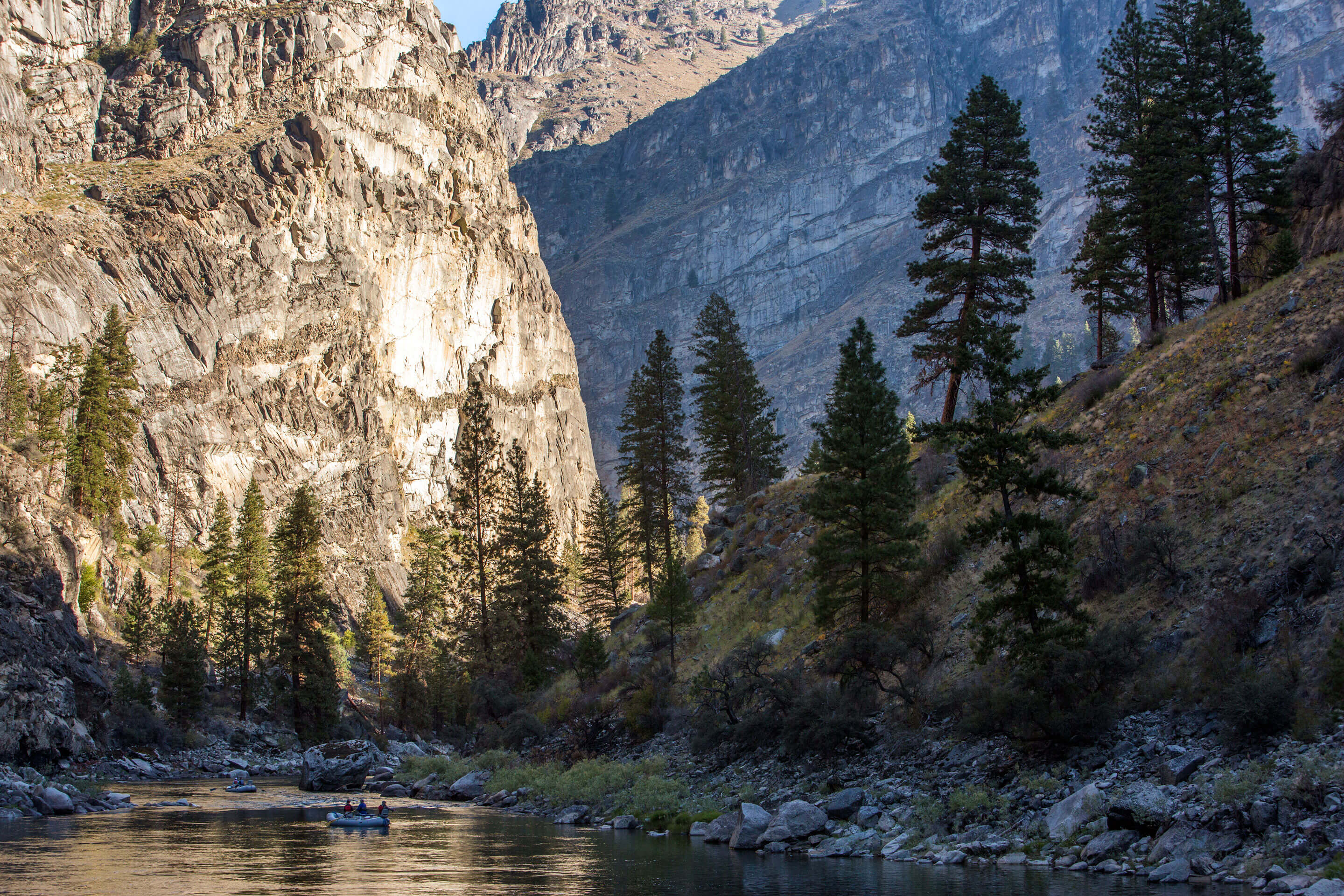
Our businesses run on public land. The Owyhees, the Frank Church, the Selway — our permits, our clients, our livelihoods exist because those acres stay in public hands. The land sale fight isn't over; it will continue to resurface every time Congress needs a budget pay-for. Radical land sales shouldn’t be subject to a simple majority, and a structural fix removes it from the table permanently, rather than relying on winning the same fight over and over.
Contact Idaho's congressional delegation using the information below, and ask them to support the Public Lands Integrity Act. A direct message from a constituent and small business owner carries weight that a form letter doesn't.
U.S. Senate
- Sen. Mike Crapo (R)
- Phone: (202) 224-6142
- Contact form: crapo.senate.gov/contact
- Sen. Jim Risch (R)
- Phone: (202) 224-2752
- Contact form: https://www.risch.senate.gov/contact/share-your-opinion/
U.S. House
- Rep. Russ Fulcher (R) - 1st District
- Phone: (202) 225-6611
- Contact form: fulcher.house.gov/contact
- Rep. Mike Simpson (R) - 2nd District
- Phone: (202) 225-5531
- Contact form: simpson.house.gov/contact